
Strengthening Research Ties with Ghana
Project Discussions with UMaT
12-16. October 2026
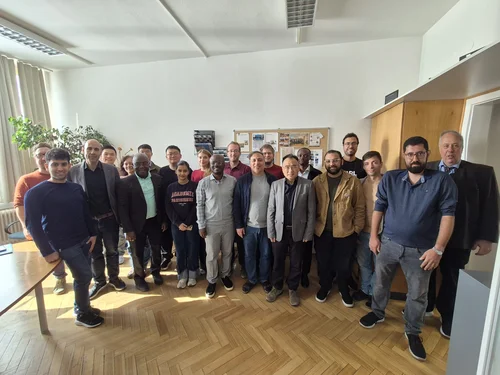
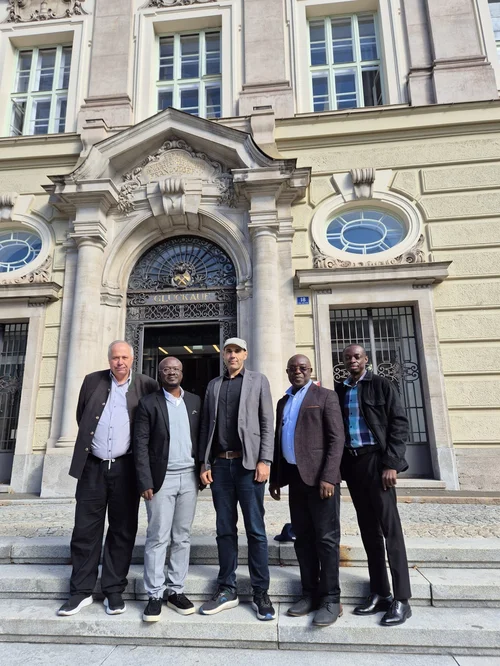
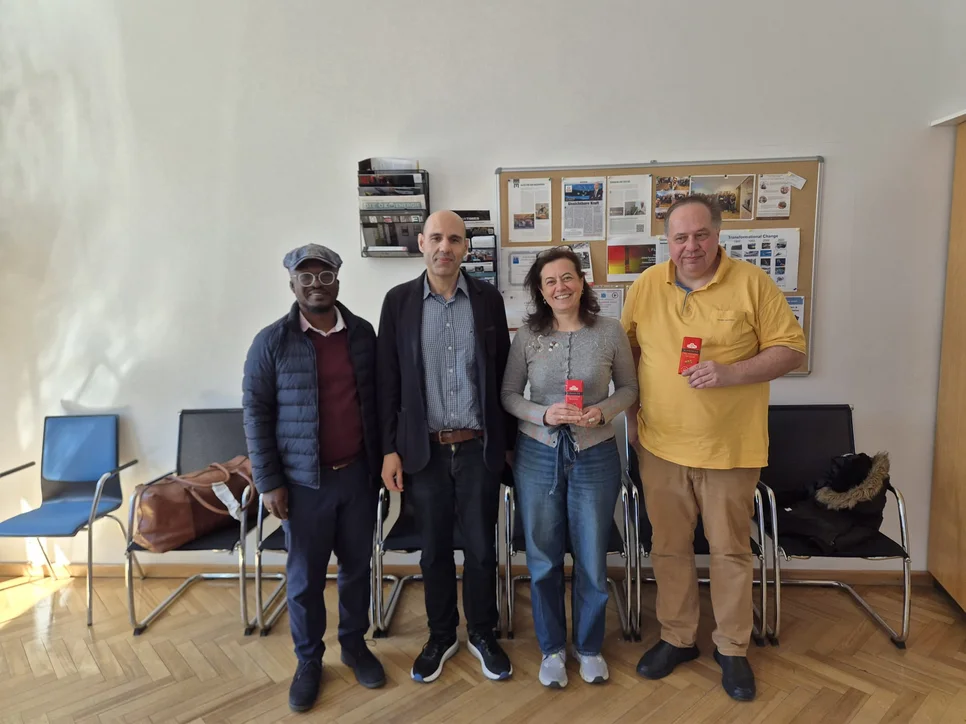
The Chair of Simulation and Modelling of Metallurgical Processes at Montanuniversität Leoben welcomed Prof. Richard Kwasi Amankwah, Dr. Asare Asante-Annar, and Dr. Clement Kwasi Owusu from the University of Mines and Technology (UMaT) in Ghana for discussions on potential future research collaborations in extractive metallurgy and mining engineering, with a particular focus on gold extraction.
The discussions centred on identifying opportunities for joint research projects and exploring innovative approaches to gold processing and recovery. Building on the complementary expertise of both institutions, the participants exchanged ideas on potential research topics, technological challenges, and opportunities for future collaboration.
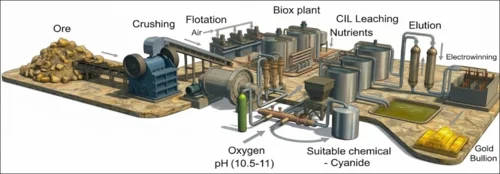
Various metallurgical processes and equipment were discussed in the context of potential gold recovery applications. Areas of interest at our Chair include leaching, bio-oxidation reactors, and electrolysis, which represent examples of technologies that could contribute to more efficient and resource-conscious extraction processes. Other processing technologies and equipment were also considered as part of the broader discussion on possible future research projects.
The exchange provided an opportunity to identify shared research interests, explore potential project concepts, and discuss how the expertise of Montanuniversität Leoben and UMaT could be combined to address challenges in gold extraction and processing.
The visit represents a valuable step towards strengthening academic ties between Austria and Ghana and exploring the foundations for future collaborative research projects in extractive metallurgy and sustainable mineral processing.
Interview: Radio Grün Weiß talks with Dr. Mogeritsch
An Interview about the METCOMP Project
Building Bridges: Montanuniversität Leoben Strengthens Cooperation with South Africa
Bridging Continents: Our Chair’s Contribution to International Cooperation
9 October 2026
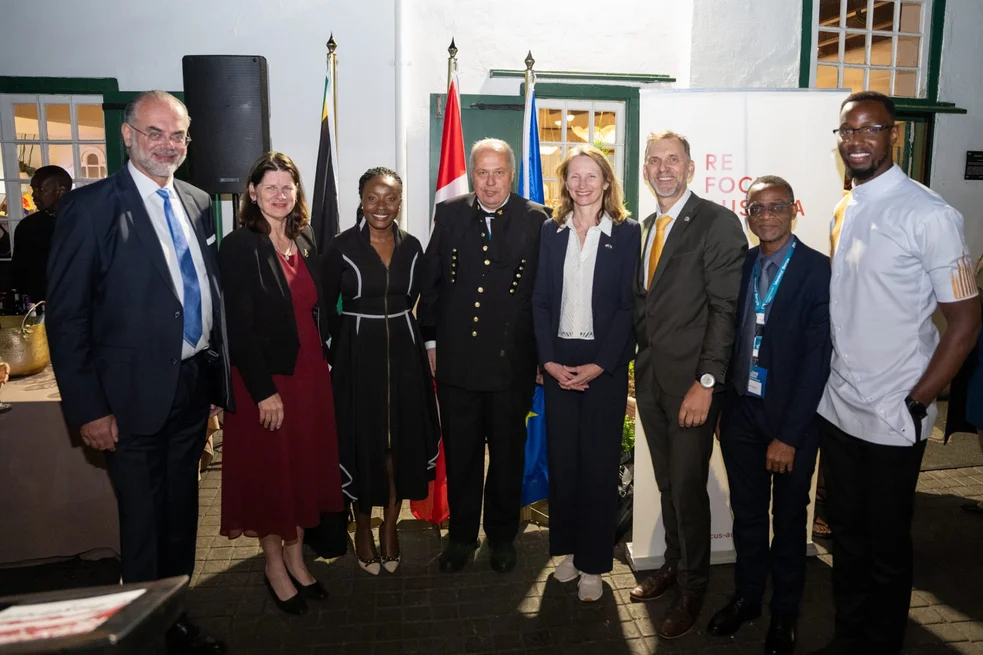
The international research symposium “Building Bridges – The Future of Africa and Europe” took place in Johannesburg, South Africa, from 5 to 7 October 2026. The initiative aimed to strengthen cooperation between Austria and South Africa in science, business, and politics, fostering new opportunities for joint research projects and long-term partnerships.
Dr. Johann P. Mogeritsch from the Chair of Simulation and Modelling of Metallurgical Processes at Montanuniversität Leoben represented the Chair at the symposium. As a member of the Energy working group, he participated in scientific discussions and the development of collaborative research approaches between European and African partner institutions.
The discussions focused on sustainable energy supply, renewable energy sources, innovative energy systems, and opportunities to implement joint research projects within the framework of the European Union’s Horizon Europe funding programme. The aim was to strengthen existing international contacts, establish new research partnerships, and develop concrete project ideas for long-term scientific cooperation between Montanuniversität Leoben and African universities.
Montanuniversität Leoben played a key role in organising the initiative alongside the University of the Witwatersrand (Wits), the European University Alliance EURECA-PRO, and the AfriSMAT Alliance. An 18-member delegation from Montanuniversität Leoben contributed to the development of collaborative research projects, particularly in the fields of Mining, Energy, and Materials.
The symposium brought together around 100 participants from 13 European and African countries. A major milestone was the signing of a Memorandum of Understanding between Montanuniversität Leoben and the University of the Witwatersrand, providing a framework for closer research collaboration and student exchange.
The “Building Bridges” initiative highlights the importance of international partnerships in addressing shared technological and societal challenges. By combining expertise, identifying common research interests, and developing joint projects, the participating institutions aim to lay the foundations for sustainable and long-term cooperation between Europe and Africa.
Click here for more information
A delegation from Ghana at SMMP
The visit of Dr. Asare Asante-Annor from University of Mines and Technology (UMaT), together with a research associate at the Chair of Prof. Kharicha, marks the official start of a new two-year collaborative research project.
The project is dedicated to generating robust and reliable input–output relationships from high-fidelity simulations and experimental data. These datasets will form the foundation for subsequent machine learning applications, with a particular focus on the development of accurate and efficient surrogate models. Beyond the technical objectives, the collaboration also strengthens international research ties and promotes knowledge exchange between the partner institutions, paving the way for future joint initiatives in advanced process modeling and data-driven methods.
Science Ambassador Dr. Johann Mogeritsch at BG/BRG Hollabrunn
Simulations Do Not Replace Thinking
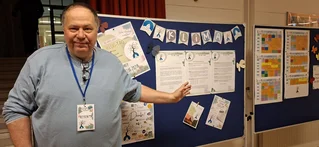
Dr. Mogeritsch recently visited a school as a science ambassador, offering students a glimpse into academic research and life through a workshop. As part of the workshop, simple simulations were carried out using Excel. The tasks are designed to be solved collaboratively in teams. Each team had to present their results to the others, followed by a joint discussion and analysis. The aim of the workshop is to provide an introduction to the world of simulation, strengthen the sense of teamwork, and encourage participants to engage in constructive, fact-based discussions.
27 Jan. 2026 - Inauguration of the new CD Laboratory for Reactive Flows in Green Steel Production and Refinement
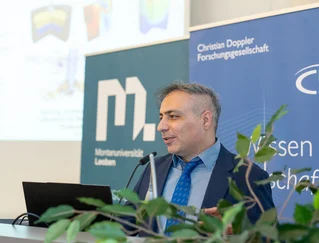
“The Technical University of Leoben has opened the new Christian Doppler Laboratory for Reactive Flows in the Production and Refinement of Green Steel. The laboratory is based at the Chair of Simulation of Metallurgical Processes, is funded by the Federal Ministry for Economic Affairs, Energy and Tourism (BMWET), and strengthens the university’s strategic focus on circular engineering. It exemplifies the close integration of top-level academic research with leading industrial partners in the spirit of the Christian Doppler Research Association.”
Click here to read the full article.
Kick-Off of COMET project FL4E&R
Freeze-Lining Aided Pyrometallurgy for Carbon-Free Metal Extraction and Recycling
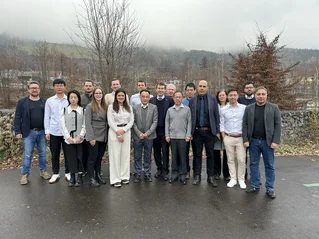
On Thursday, 4 December, the Technical University of Leoben hosted the official kick-off meeting of the international research project FL4E&R – Freeze-Lining Aided Pyrometallurgy for Carbon-Free Metal Extraction and Recycling. The event marked the start of an ambitious initiative dedicated to advancing the scientific and technological understanding of freeze lining formation in high-temperature pyrometallurgical furnaces. This phenomenon, essential for process stability, refractory protection, and improved energy efficiency, remains one of the key technical challenges in modern furnace operation.
The FL4E&R project represents a major collaborative effort that integrates controlled laboratory experiments, pilot-scale trials (in Direct Reduced Iron – Electric Smelting Furnace (DRI-ESF) and slag fuming processes), and advanced computational modeling. The consortium is led by the academic partner at the Chair of Simulation and Modeling Metallurgical Processes (SMMP) in Leoben, working in close cooperation with academic partner KU Leuven and industrial partners RHI Magnesita, Aurubis Beerse, and Primetals Technologies.
The knowledge gained through this initiative is expected to be a major step forward in supporting the transition toward carbon-free metal extraction using the DRI-ESF route and to enhance sustainable recycling through optimized electrically-powered slag fuming operations. The successful kick-off meeting underscores the consortium’s shared vision and establishes a strong foundation for the collaborative work ahead, aligning closely with the university’s commitment to forward-looking research in energy and environmental technologies.
ESA Exploration Science Workshop
26-28 November 2024 in Warsaw, Poland
Handover of office
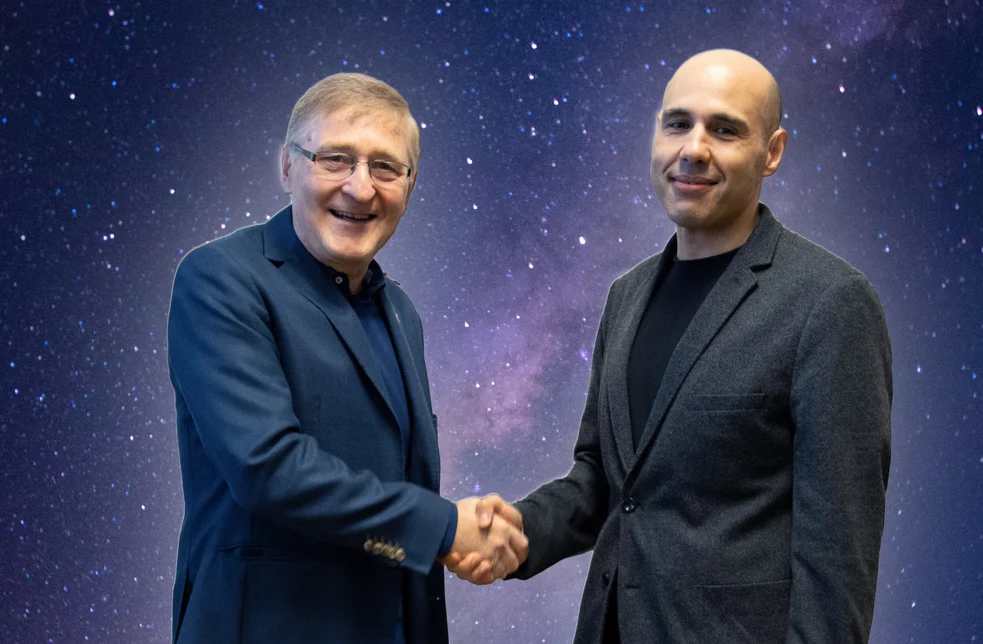
On Friday, March 1st, em. Univ. Prof. habil. Dr. rer.nat. Andreas LUDWIG officially handed over the chair to his successor, Univ.-Prof. habil. Dr. Abdellah KHARICHA.
The ESA - Exhibition continues
From 12.01.2024 until 30.01.2024 in "KulturQuartier" in Leoben.
ESA - Exhibition November 2023 @ MUL
New µg-campaign onboard the International Space Station (ISS)
Layered peritectic solidification experiments will be performed onboard the ISS from October 4 to 17. These experiments will focus on investigating the dynamic behavior of the solid-liquid interface within the organic model system TRIS-NPG.
Solidification experiments conducted on the International Space Station (ISS) have pushed the boundaries of materials science, offering distinctive perspectives into the fundamental mechanisms of layered peritectic solidification patterns, like bands and peritectic coupled growth. Such pattern can occur for process conditions where both phases (pro-peritectic and peritectic) solidify planar. To do so, the organic transparent components TRIS and NPG are used as a model system since both components show a transparent plastic crystal in their high temperature phases. This, and a peritectic plateau, enables the in-situ observation of peritectic solidification patterns since plastic crystals solidify metal like. Within the microgravity confines of the ISS, the Chair for Modeling and Simulation of Metallurgical Processes has the unprecedented opportunity to conduct experiments with the ESA-constructed TRANSPARENT ALLOYS device, which in fact is nothing more but a Bridgman-furnace. Such experiments would be unfeasible on Earth due to the absence of gravitational influences on the solidification process onboard the ISS. This distinctive microgravity setting promises to yield invaluable data, paving the way for advancements in materials science and diverse industrial applications, ultimately benefiting both the realm of science and society as a whole.